Publishing stories of fascinating Prairie People and Unsung Heroes

Welcome to the blog of Deana Driver - author, editor, and publisher of DriverWorks Ink, a book publishing company based in Saskatchewan. We publish stories of inspiring, fascinating Prairie people and unsung Canadian heroes - written by Prairie authors including Deana Driver. We also publish genres of healing and wellness, rural humour, and children's historical fiction. Visit our website to learn more about our books.
Showing posts with label death. Show all posts

Wednesday, December 19, 2018

Getting Through the Holidays While Grieving

For the last couple of weeks, I've been thinking about writing a blog with tips on how to get through the holidays when you are grieving ... but I honestly didn't have the emotional strength to do that until now.

It takes energy to write and even though I've been a writer for the last 35 years, it's been a struggle to put words into order since my husband, Al, passed away almost three years ago. Colon cancer was the cause. Frickin' cancer.

Okay, enough about that. I am fine. Most days. I am carrying on the best that I can while missing him every day but being grateful for the life we had together.

I am fine.

But you might not be.

Grief can be heightened during special occasions such as birthdays, anniversaries, and holidays. I learned a lot about grief in my work as a journalist and in my reading and experiences after Al died. I wrote about these lessons a month after he died, and I will repeat some of the ones that are specific to Christmas, New Year's Eve, and other special occasions.


Be kind to yourself. It may be helpful to go to some events so you don't spend all your time alone, but give yourself permission to say "no, thank you" if it feels wrong to attend something on a particular day. For example, I did not go to our church's "quiet Christmas" service this year. I was not feeling sad for a change, so why bring sadness into a good day when I had experienced so many sad moments already?

Breathe. Take long, deep breaths, especially when you feel overwhelmed by invitations or expectations. For the first few months after Al's death, I often stopped walking - just stopped - and concentrated on taking three deep breaths - one ... two ... three - to regroup. There is scientific proof that deep breathing helps our body to release anxiety and stress. Taking some deep breaths is one of the easiest ways to keep going when you think you can't go anymore.

Left foot, right foot. In the early days of my grieving, this is the only way I could function - by telling myself to breathe and to put one foot in front of the other to get through this moment, then get through the next moment. Take one step at a time, make one decision at a time, and don't let others tell you what to think or do or how to feel.

Feel your feelings. If you feel sad or angry or upset or confused, it's okay to express it. It's okay to cry - anywhere. This doesn't mean you will feel this way forever. Bottling it up will delay healing and no one wants that. Do not apologize for how you feel. Apologize if you hurt someone while you are feeling, though. If possible, choose who you are with as you feel your feelings. (See 'Be kind to yourself' above.)

Rest. We concentrate too much on achievement and not enough on self-care. When grieving, self-care is essential. Rest does not necessarily mean getting a good night's sleep. That is elusive when you are in the midst of deep grief. If you cannot slow your overthinking mind enough to have a nap, try sitting in a comfortable chair or lying down for a few minutes. Close your eyes and turn off your brain for a short break. Rest.

Pre-arrange transportation. When grieving, it is important to have some control over your ability to come and go from parties and other holiday gatherings. If you suddenly feel overwhelmed or too sad to stay, have a friend or family member drive you home. Be careful not to drive when in the depths of grief as your mind may not be fully focused on the road. Be kind to yourself and others.

A bereavement support program gave me this helpful brochure:


The brochure's tips from Kelly and Karin Baltzell are:

  • Pace yourself 
  • To say 'No' is okay 
  • Pamper yourself 
  • Tell people what you need 
  • Make new rituals 
  • Honor traditions 
  • Remember your physical needs 
  • Tell others exactly what holidays are important to you 
  • Crying is okay 
  • Make action plans 
  • Consult your family and friends 
  • Lean on your faith
To help ensure our first Christmas without Al was a little less painful and full of dread, I suggested to our children that we each make a donation to a charity that we thought he would like. On Christmas morning, we celebrated his life by telling each other the donation we made, of cash or something else, in his memory and why we chose that charity. The amount of each donation wasn't mentioned. It was not important. We had contributed to a worthy cause in our communities in memory of a great man.

We smiled and even laughed. And we cried, of course. Tears of love.

I wish that for you this holiday season - that you get through it the best way you can while remembering your loved one and taking care of yourself.

Happy holidays!

Monday, September 25, 2017

GRIEF AND LOVE ARE INTERTWINED


July 4, 2017 - A couple hours from now will mark 18 months since my wonderful husband, Al, left this earth to join the rest of the angels. (I can see some of you snickering right now because there were pieces of Al's personality that weren't exactly angelic ... and he would roll his eyes at that first sentence, I'm sure ... but none of us are perfect either and I believe his hug-filled, loving spirit is in a beautiful place right now, doing God's work.)

Anyway ... as I was saying...

Like the rose I planted in Al's memory, I and our children (and our closest family and friends) have had ups and downs these past 18 months. We've had moments of blossoming and beauty, and moments of wilting and falling apart. We are continuing to live our lives though, one moment at a time, one day at a time, one season at a time, and we thank you for standing by us and nurturing us, especially when we needed it most.

​We are healing. Grieving still, but healing a bit more every day. 

Our children and I have honoured Al in our own ways - with words both written and spoken, with plants and other memorials, with donations to charities he would love, and in trying to be the best people we can be. We will continue to keep his name on our lips and in our hearts as we move forward in our lives without him.

I've learned that grief is more about love than it is about loss. Yes, we miss the one who died, but we wouldn't grieve them if we didn't love them.

We grieve because we loved. They are intertwined and will always be so.

" 'Tis better to have loved and lost / Than never to have loved at all," wrote Lord Alfred Tennyson. I agree.

I and many of you won't forget Al or our story together. I wouldn't have it any other way. He was a big, bold, rambunctious blessing to me and to so many others, including many of you who are reading this. Thank you for helping me, our children, and our closest family and friends get through these 18 months.

​We will be fine. He wouldn't want it any other way.

Let's carry on.
In full bloom, the Winnipeg Parks rose bush purchased and planted in our yard in memory of Al.


Thursday, September 14, 2017

GROWING AND BLOSSOMING FROM A GRIEF RETREAT

This post was written on July 23, 2017. 

Yesterday was a good day. There were many moments of sadness, tears, and sorrow, but there were also moments of healing, laughter, and grace. It was good.

I am grateful for any "good" part of any day that has come my way since my husband died in January 2016. Anyone who knew my fun-loving, hug-giving Al knows that my life isn't nearly as "good" or as funny now as it has been for the last 40 years with him by my side. But I am trying, and yesterday was a big step towards more healing, learning, and peace as I was one of about 60 people who participated in the first-ever, full-day Heart 2 Heart Family Grief Retreat hosted by Palliative Care Services of the Regina and Qu’Appelle Health Region. It was fabulous.

We spent most of the day in group sessions that were specific to our type of loss and age group.


The session in which we shared our individual stories of losing our spouse was one of the hardest parts of the day. It was an important exercise that led to more healing, but many of us found it extremely painful to talk again about our losses – all involving palliative care circumstances – and to listen to the stories of the others in the room. However, telling the story is an important part of the process of grieving.

This sharing forged a strong, almost instant bond among us. We built on that as we attended workshops, yoga, meditation, made pebble art, exchanged information and fun stories about our loved ones, ate snacks and meals, discussed coping strategies, and so much more.

I was exhausted emotionally and physically at the end of the day, but the memories and the toolkit of tips and reminders that I carried home were priceless.

I was reminded that I am not alone on this grief journey. Others are also hurting, but there is help available if we are brave enough to seek it. Talking to other widows and widowers can be painful but helpful as they have also experienced the excruciating loss of a life partner. They do not judge; they listen and support. These are difficult skills to learn and put into action. I’m still working on them myself.

We received a wonderful handout with information from Victoria Hospice.​ I will read this handout many times over the coming days and months, and check other resources online and with a counsellor to continue with the process of grieving and healing.

I was reminded about the tips in my own blog post, “What I’ve Learned About Grief”, that I wrote just one month after Al died. I decided it would be important to share that information again because it could help someone. (Here’s the link.) I was reminded to reread my own blog post and to try to live those words, being gentle with myself – especially in my sadder, lonelier moments.

I learned about the power of self-compassion meditation from a Regina meditation instructor who also told us of the meditations of Tara Brach, available online. The instructor led us in an exercise where we placed our hands, one on top of the other, over our hearts and tuned into our breathing and feelings. The theory is that you let your thoughts float gently through your mind without judgment and you concentrate on your breath, just being in the moment for a few precious minutes of your busy day.

We talked later about how, when we lose our spouse, intimacy in the form of a daily hug or touch of a hand on the shoulder or arm is gone. We need to learn to be kind and compassionate to ourselves. We learned that touching our own hand, stroking our own cheek, or holding our hands over our heart can calm us and give us comfort. This 15-minute exercise helped many of us and gave a name to something I had found myself doing often when I felt anxious or sad. I learned this hands-over-heart idea a few months ago from my dear friend Susan. I did not know it had a name or a specific, science-based purpose until now. I was grateful for this meditation session.


On my way back to the retreat sessions from the park where we meditated, I noticed an abundance of beautiful flowers on the edge of the community garden nearby. I had sat by the other side of this large garden earlier in the day during a moment of grief after I saw all the photos of deceased loved ones, including a photo of my Al, on a memorial table. My mind quickly said, “He doesn’t belong there,” but I’m sure every other person at that retreat thought the same about their loved one. Still, the sight of Al's photo on a table with about 40 other photos hit me in an unexpected moment and I went outside and cried, stared at the garden, collected myself, then went back inside.

I had not noticed the flowers at the edge of the garden until then.


​I stopped to not only smell the roses but to take some photos.


Flowers make me smile and, at that moment, this garden was the fitting end to the meditation session. Flowers are colourful and full of life. They give me pause and hope for the future.​

We ended the day with a memorial service for our loved ones. We wrote their name or a note or a wish to them on a small paper “ornament” and hung it on a tree as we entered the chapel. We listened to inspirational words, in prose and poetry, sang a song with piano and guitar accompaniment, stared at our lit candles, and sat in silence. 


“Grieving is hard work,” a friend and pastor reminds me regularly. So yesterday was a good day of hard work.

​​I left the retreat grateful for the counsellors, leaders and volunteers who did so much to make it a good day; for the other participants who shared their stories and wisdom so freely; and for my family, who supported me with a debriefing and constant love as I made my way one more step along this road that we did not choose.

This summer when I was visiting my oldest daughter and her family, I bought a garden stone that sums up this story.

Gardening brings me peace. ​Gardening is good.

We are never sure of what tomorrow may bring, but we can carry on and live in hope, with the help of others. 


Monday, September 11, 2017

WHEN THE GOING GETS TOUGH, SIZE DOESN’T MATTER


It is one of the smallest plants in my garden, slightly bigger than my cellphone, but it is mighty.
 
This beautiful mini rose was a gift from a dear friend, in memory of a granddaughter that we lost at birth years ago. This little rose is an indoor plant. It was not meant to handle the harsh weather and severe winters of Western Canada. But it has survived and thrived in my garden for eight years, and I have loved it dearly.

Most years, it has been bountiful, producing a multitude of gorgeous flowers all summer long, filling that part of my garden with precious yellow petals. This year, I thought the rose bush was gone forever. There was no sign of it in June, July or the first two weeks of August. Suddenly, in mid-August, it appeared out of nowhere, shooting its tiny self out of the ground and up toward the sky.
 
A few leaves began to show and then a tiny bud came, followed soon by another bud. I was elated.
 
This little plant, you see, is a symbol of life to me. Although it marks the passing of a dear one, it also brings a sign of hope for the future. Its beauty shines into every new day and lifts me up with hope for happier times ahead.

​Sometimes life throws nasty curveballs at us. We can duck out of the way sometimes, but there are times when we are hit and badly bruised. Sometimes we are smacked right in the forehead and temporarily knocked out. But it’s important that we try hard to get back up - to regain our consciousness and shake off the cobwebs. Then we must stand up as tall as we can and keep on going. It’s not easy, but we have to try.

My granddaughter’s rose and other plants are a reminder of that for me. When the going gets tough, we need to find a safe place where we can carry on, do our best, and bring hope to others. 

​It's what we were made to do.


Thursday, September 7, 2017

LIVING MY LIFE AFTER MY HUSBAND’S DEATH – CHERISHING MY “BIG A”

(Months ago, my bereavement counsellor suggested that I write about this particular time in my grief journey. "It will help others," she said. I am now ready to share this story.)

Nine months was when it happened. When most people, aside from my family, lost interest in me talking about my pain and sadness over my husband’s death.

Some of my closest friends and supporters even struggled to feign interest and patience as I cried or poured out my broken soul to them. I couldn’t blame them. Their lives had only been mildly affected by the death of this outgoing, fun-loving, witty, gentle giant of a man, while my life had been utterly broken. After all, I spent almost 42 years with this man as a major part of my daily life. They did not. And after almost nine months of them caring for the newly widowed me, they had already said and done pretty much everything they could think of to try to help me through my grief. No, I couldn’t blame them.

To backtrack a bit, we learned in December 2015 that my husband, Al, was not going to survive the Stage IV colon cancer that hit him out of nowhere in August 2015. He died on January 4, 2016, a little more than two weeks after we were told his cancer could not be cured. His death was unexpected, shocking, and devastating for those of us who loved him.


His last wishes were that we, the people he loved, go on and live the best lives that we can. We are trying.

When it comes right down to it, no one can help you through ALL of the pieces of grieving the death of your spouse, the most important person in your life. Not your family. Not your friends. Not your pastor. Not your bereavement counsellor.

No one but you.

You have to do a big part of the work yourself. You have to figure out your new life without your beloved in it. And you have to try not to be offended or upset when people try to help you or, conversely, walk away or avoid you because they - and you - know they can't help.

At the end of September 2016, I realized that I had almost made it through nine months since my husband died. I was still sad, still broken. Although some people were trying hard not to suggest that I should “move on” or be more chipper, I saw that it was becoming more and more difficult for many people to visit with me and be dragged down into my puddle of grief.

So I decided to try to hold it in. To keep quieter. To talk less about him. To journal more and keep more of my pain, my thoughts, my sadness, and my loneliness to myself.

I had not been inside my own head so much in my life as I had been in those nine months. With no one to talk to every day, unless I picked up the phone or went away from my home-based business (which I used to share with my husband), my thoughts overwhelmed me, and I struggled to stay upright sometimes.

After he died, I had to rethink everything. Everything.

I soon chose not to come to many conclusions about my new life. I learned early that the best strategy when grieving such an excruciating loss is to take it easy. Take a deep breath. Take another breath. Keep going. Put one foot in front of the other. Get through this moment. Get through another moment. Don’t worry about the thoughts or advice or expectations of others. Do what you need to do in that moment. Rest. Cry. Yell. Grieve. But, most importantly, be gentle with yourself. (I wrote about this shortly after he passed away - What I've Learned About Grief) 

I still struggle at times to live out these helpful words.

What became very clear to me was that I had to work hard at staying positive. I needed to keep taking steps forward, as Al wanted for me and I wanted for myself.

I had moved my wedding rings to my middle finger a few months after Al died, but they were starting to look and feel wrong. I realized that they were making me sad, reminding me every day of what I had lost. Even if I was having a good moment or a good day, my wedding rings moved me toward sadness. It was not how I wanted to live the rest of my life.​

I tested a new look one weekend in September 2016 by not wearing my wedding rings. A few days later, on September 28, I took them off and did not put them back on.

In mid-September, I had heard a radio commercial for a local jewellery store that was closing at the end of the month because the owners were retiring. I had taken my wedding rings to that store for resizing a few years earlier, on the recommendation of Dionne Warner, the inspiring seven-time cancer survivor I wrote about in the Never Leave Your Wingman book. The owners knew Dionne and her amazing story, and the woman jeweller remembered and recognized me when I walked into the jewellery store two days before she and her husband retired from their business. I was impressed. 

I told her why I was there. “My husband passed away from cancer and I don't want to wear my wedding rings anymore,” I said. “I want something to remind me of him and our time together, but I don’t know what.

“Oh, I’m so sorry,” she replied. And she began to cry.

I was moved by her caring. We stood for a second, then wiped our tears and carried on. I asked about necklaces and she showed me options for melting down wedding bands and placing the diamond in the centre of the blob of gold. I laughed, and I imagined Al's laughter at that concept too.

“You wouldn’t be able to see the diamond from my ring if you did that!” I told her.


You see, Al and I became engaged in Calgary when we were impoverished students finishing up two years of journalism classes at SAIT. We went downtown one day in May 1975 to look for an engagement ring so we could get engaged before I left Alberta and moved to his home province of Saskatchewan to marry him and live happily ever after.


We found a ring that we liked and could afford. Since Al wasn’t getting paid from his part-time job as a pizza delivery guy for another few days, I wrote a cheque for the $30 down payment on my own engagement ring.​ That might seem silly to some, but it was reflective of our relationship – make the decision together, do what needs to be done, and move on.

Al paid me back after he got paid. No big deal.

So in September 2016, at the jewellery store in Regina, I decided that a blob of gold with my diamond set in a necklace was not for me. I also wanted to continue wearing other necklaces I own and I did not want to feel compelled to wear only one, so I decided to look to see what else was available.

The jeweller showed me some rings - starting at a very high price, of course, and then working down to a cost that was more to my liking. I asked to try on only two of the rings she suggested, but they were too bulky and ostentatious for me.

She then asked if I preferred gold or white gold. “My wedding rings are white gold, so that would be nice,” I told her.

She pulled out another ring from the display case and I knew this was my ring. It was beautiful. Perfect, in fact.

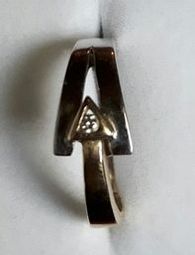
This new ring is a combination of white gold and gold, and I immediately loved the design. Very unique and very personal. It fit my story exactly.

I bought the ring and asked for suggestions on where to take it for resizing since they were closing within 48 hours and could not do that work themselves. I wished the woman good luck in her retirement, then walked out of the store, pleased with myself and especially pleased with my purchase.

I wanted to show this ring to all three of our adult children in person over the next few days, so I kept the undersized ring inside its jewellery box and I carried it with me. That evening, I talked with our youngest daughter, Dani, after our yoga class. I told her about my decisions to stop wearing my wedding rings and to buy another ring in memory of her dad but also in recognition of my new life without him.

Dani was thrilled. “It’s an arrow pointing to your future!” she said of the design. She was proud of me, doing something just for myself (since I am not a me-oriented person) and moving forward with my life.

Her reaction surprised me. I had not seen an arrow in the design.

​The next night, I shared the story with our eldest child - our son Dave - and his wife, Kelli. Dave was shocked and speechless for a couple of hours, but that was my fault. I carelessly started the conversation by holding up my bare left hand and saying, “Look! No rings!” While I was excited by this, knowing the happy ending to my little story, imagine the grief that our son had to process in those seconds of recognizing that the band symbolizing his parents’ 40-year-marriage was now gone. I quickly apologized to Dave. I did not realize how that would look to him.

After I told Dave and Kelli the whole story and showed them my new ring, they were pleased for me. Kelli saw the design as a linking of two things. Dave told me later, “I really like it, Mom. It’s really cool and I hope it brings you some comfort.”

That weekend, I visited our oldest daughter, Lisa, and her family. Lisa was very excited by my purchase and loved the ring. “It’s two souls coming together!” she exclaimed about the ring’s design.

Friends who saw my new ring also thought the same – they saw the design as two lives joining or a clasp holding two people together.
​But that’s not what I saw in my ring.

​When the jeweller first held it up to me, I immediately saw an “A”. ​For “Al”. My Al.

That’s why I bought the ring.

Weeks later, I laughed out loud when I remembered that my mom used to call my husband “Big A” – because he was almost a foot taller than everyone in my family and he was a lot larger than most of us too. His big personality matched his size as well. "Big A."

In my diary entry on September 30, 2016, the night that Dave told me he hoped the ring brings me comfort, I wrote:  “I know that it will. It already has and I’m not even wearing it yet. Al did not choose to get sick and die, but I have to choose to live and to live well. When I bought that ring, it was a big physical reminder of my decision to carry on without him here, but cherishing his memory and our love everyday when I look at my hand. He will always be with me, and now I will wear it on my finger as a visible symbol of our never-ending love.”

I cherish the many years I had with Al. I wish that everyone in the world would be blessed with such a great love. I miss him dearly every single moment of every single day, but I am so grateful that he was with me, that we were together.

I have been wearing my new "A" ring for eleven months now. For eleven months, I have felt love when I look at my left hand. Love instead of sadness.

​The never-ending love between me and my Big A.


Monday, February 8, 2016

What I’ve learned about grief

I apologize to every person I’ve ever met who has lost a spouse to death. I had no clue.

While I knew that your spouse died, I didn’t know the kind of mind-numbing, gut-wrenching, life-altering, hole-in-the-chest pain that you must have experienced after their death.

I didn’t know until now. And I’m sorry I wasn’t a more compassionate, helpful friend to you.

I have grieved the death of my father-in-law, my father, my mother, and several close friends and family members. The pain of those losses was severe, but I did not feel the same kind of despair and complete heartbreak that I have felt since January 4, 2016, when my husband, Al, died only four and a half months after being diagnosed with Stage IV colon cancer.

Al’s illness had no warning signs and his health went downhill quickly. He woke on the morning of August 20, 2015, with a pain in his abdomen. Emergency surgery found a fist-sized tumour on his colon, which led to a high-output ileostomy and numerous complications that required repeat hospitalizations over the next few months. Al passed away in a hospice bed in January, with me and several nurses at his side. Losing him has been confusing, frightening, surreal, sad, and so much more. It feels like a large part of me went with him when he died.

I try not to dwell on the discomfort he must have felt while so courageously and gracefully going through his cancer journey. (He hated the phrase “battling cancer”, so I try not to use it.) We had many beautiful, precious moments together during those last few months, but those are hard to remember when the pain is so raw.

I think about him every day, sometimes in almost every moment of every day. I know it is still early – only a month after he died – but sometimes the pain is so overwhelming that I can’t think of anything else. And I sit alone and try not to become consumed by the ache in my soul.

I try not to think of how empty my new life is right now. I struggle with finding a “new normal”.

I know, logically, that it will get better as I grieve and heal, but the heart doesn’t always work together with the brain, so I must go through this pain in order to move on. It is obvious that my journey on this earth is not yet finished and I need to continue to do the best I can to live my life to the fullest, while honouring Al and all that we worked for in our 42 years together.

I have learned a lot more about grief in the past month – from reading materials, by talking to family and friends, by attending a bereavement support group, and from experiencing it. I have also been reminded of many things that I learned in my years as a journalist about how to help others who are grieving.

What Not To Say To Someone Who Is Grieving:
“I know exactly what you’re going through. I know how you feel.”

No, you don’t. It is not possible.

Every human being is different and every relationship is different. Every grief journey is different.

You may have an idea of some of the feelings the bereaved is having, but you could never know exactly how they are feeling.

My relationship with Al and our time together before he died is very different from what anyone else experienced in their relationships. Plus, I barely know how I am feeling from minute to minute, so how could you know?

Oh, I know. It still hurts ___ years later.

Putting a time frame on someone else’s grief journey is not helpful. Every person is different and every grief journey is different. Phrases like this may also be an indication that you have work to do in your own individual grief journey and you may benefit from some grief counselling or support programs.

What To Say Instead:
“I’m sorry for your loss.”
“If you’d like to talk, I will listen.”
 “Can I give you a hug?”
“Would you like me to come over and just sit with you?”
 “Can I call you occasionally just to see if you need anything?”

What I have learned that has helped me grieve my husbands death:
  • Breathe. Long, deep breaths.
  • Be kind to yourself. You did not choose this. You need time to adjust to this new reality.
  • Rest often or have a nap. Grieving is hard work. Do not expect to accomplish much each day, at least for the first while. Give yourself a break.
  • It’s okay to feel sad. It doesn’t mean you will feel sad forever. It means you feel sad now and that’s okay. Give yourself permission to feel how you need to feel.
  • Wherever you are and whatever you are doing, it’s okay to cry. You don’t need to explain your feelings or to apologize for them. You don’t even need to understand your feelings. You just need to feel them and express them if and when you can.
  • Give yourself time to grieve. Grief is not an orderly series of stages that lines up perfectly with any given time frame. Grief has been described as “a tangled web of emotions” and it may take months or years for you to untangle some of those feelings. That is absolutely normal. Everyone’s grief journey is different. Remember that you are doing the best you can with the situation you had or have in front of you. Let that be enough for now. Try to ignore or stay away from those who think you should be “over it” or moving on with your life before you are ready.
  • It is normal to feel like you do not want to go on. Usually, that is a fleeting feeling that will dissipate with time. It is not normal to consider suicide. Seek professional help immediately if you are considering harming yourself.
  • Seek out bereavement support, whether that be in the form of an organized support group with facilitators, a religious or spiritual leader, a professional counsellor, or books from the library. Take what you find valuable from those resources and don’t feel bad about ignoring the rest. One of my cousins started a “grief scrapbook” in which she pasted helpful newspaper articles, clippings, tips, and meditations to help her grieve her husband’s death. I use a notebook.
  • Read a good book or listen to music to distract yourself or, in my case, to bring you some happiness. This is self-explanatory, but I do happen to know of a little Canadian publishing house that has some pretty great books (wink, wink). And music can soothe the soul.
  • Watch TV or a movie to give your mind a break. I have a couple of new favourite movies that have helped me to grieve my husband’s death.
  • Write your thoughts and feelings in a journal, either daily or whenever you feel the need or desire to write. Don’t worry or feel bad if your thoughts change. That’s what thoughts do. Your thoughts and feelings are sure to change as you grieve and heal.
  • Write a letter to your loved one. This may be especially helpful if the death was sudden or there were some things that were left unsaid. I write to Al or to God almost every night before bed. Sometimes the letters/journal entries are tender and filled with longing. Sometimes they are full of pain and tear-stained. Often, they are both. Always, they help me heal a tiny bit more.
  • Make a list of the people who have offered to help you. Look at your list and choose whoever you will find comfort in during a particular moment. Then call them to chat or ask for help. My list includes people whom I can phone and ask to stay with me so I won’t be alone for the first while as I grieve.
  • Don’t feel guilty about not responding to and staying in touch with everyone who contacts you. Choose what you need to do and who you need to talk to and let the rest go for now. Focus on you.
  • Leave your home at least once a day. Go for a walk or a bike ride. Go for a drive. Give yourself a change of scenery. Remember that there is still a world out there.
  • When you are strong enough, go places in your own vehicle. Then if you suddenly feel you cannot stay, you have the freedom to leave without disrupting other people’s plans. Be careful to drive only after your mind is healed enough to concentrate on the road ahead – literally – and to remember how you got home.
  • Try not to dwell on feeling guilty. You may have difficulty accepting that it is okay for you to continue living your life. My husband, Al, asked me to promise him that I would live my life to the fullest and not let his death consume me. I replied that I would try, but that it would take time. I’m not there yet, but I’m working on it. Grief counsellor Andrea Mackay of Greystone Bereavement Centre in Regina SK explained that guilt is “the little bully that we all have inside us. When that guilt sits on your shoulder, flick it off, and tell it to F--- Off!”
  • Try to think of the good times and be grateful, but try not to let the uncertain future break you into more pieces. You will feel sadness about the loss of future good times, but keep putting one foot in front of the other and focus on getting through one minute at a time, one day at a time.
  • Allow yourself to take a break from work, if you are able to do so, whether it is for a few minutes, hours, days or longer. I am blessed to be self-employed and grateful that I do not have huge financial burdens at this time. I am thankful that I work with patient, caring, compassionate authors who have become friends and who have accepted my need to work at a slower pace and give myself time to figure out the new face of DriverWorks Ink publishing.

Thank you to all who have helped me and my family in any way during these past five months since Al's initial diagnosis.

Thank you for your understanding as I take time to slowly heal. I feel your love and it is appreciated.

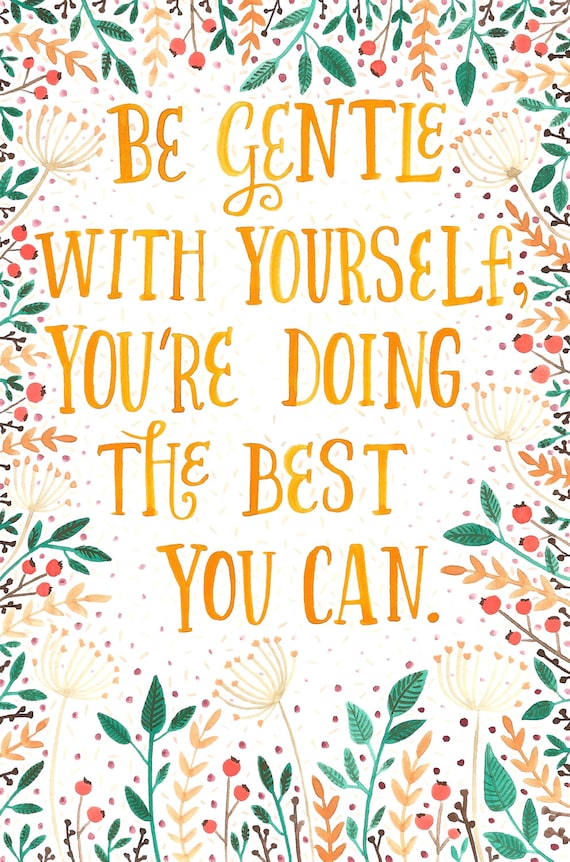
Be Gentle With Yourself
From:  https://www.etsy.com/ca/listing/184864560/be-gentle-with-yourself


(You may be interested in this post from April 2017: Living My Life After My Husband's Death - Cherishing My "Big A".)

Friday, January 29, 2016

Best Exotic Marigold Hotel Is Helping Me Heal

The movie, The Best Exotic Marigold Hotel,  is described as being about this: "British retirees travel to India to take up residence in what they believe is a newly restored hotel. Less luxurious than advertised, the Marigold Hotel nevertheless slowly begins to charm in unexpected ways."

To me, the movie is about people who are my age – 60-plus – who have had to find new ways of carrying on with their lives. Some have suffered loss of a spouse, as I have. Others have had situations happen to them which have forced them to consider where they will live and how they will live comfortably. Some are simply looking to keep on living, with gusto.

The movie spoke to me on many levels. I loved the characters. They're real - sharp-witted, somewhat cranky, oddball, honest, brave, intelligent, lovable, or some combination of those traits. I loved the main actors – who doesn't love Judi Dench, Maggie Smith, and Bill Nighy?

But most of all, I appreciated the wisdom in the writing. I won't spoil the storyline for you, but kudos to Deborah Moggach, who wrote the novel (I must buy the book now!), and Ol Parker, who wrote the screenplay. Well done.

I accidentally watched “The Second Best Exotic Marigold Hotel” last week and I enjoyed it a lot. Then my children, who are often wiser than I about these things, informed me that the first one was very good as well.

“What? There is a first one?”

So I spent more than two very enjoyable hours last night ... err... early this morning, since those are the hours one keeps after the death of a spouse ... watching and loving every minute of the first Best Exotic Marigold Hotel.

It led me to have a good night’s sleep for only the second time in the almost four weeks since my husband, Al, died. 

The movie gave me a few smiles, some clever dialogue, and some strong, relatable characters with real-life problems and solutions. Most importantly, the movie gave me a sense of peace and more courage to carry on. It helped reinforce the knowledge that there is more for me around the corner. I will heal eventually. I will never be the same. I will always carry Al with me in my heart and in everything I do, but I will be able to do new things, have new experiences, and feel happiness again – eventually. Hopefully.