Publishing stories of fascinating Prairie People and Unsung Heroes

Welcome to the blog of Deana Driver - author, editor, and publisher of DriverWorks Ink, a book publishing company based in Saskatchewan. We publish stories of inspiring, fascinating Prairie people and unsung Canadian heroes - written by Prairie authors including Deana Driver. We also publish genres of healing and wellness, rural humour, and children's historical fiction. Visit our website to learn more about our books.
Showing posts with label Canadian publishing. Show all posts

Tuesday, June 14, 2022

Publishing books and sharing the stories of others is no ordinary thing

I’ve spent most of my adult life writing or editing or designing newsletters or book layouts, or publishing and selling books, and I sometimes forget how cool that is. 

So far, I've written five non-fiction books and contributed pieces to more than a dozen other books. And I've published more than 70 books written by 50 or 60 (mostly Western) Canadian writers. That's been my life since I wrote my first book in 2001.
 
My adult daughters sometimes remind me that “most people don’t do this, Mom. They don’t go to a bookstore to sign the books they’ve written.”
 
I've also been reminded that most people aren’t interviewed by the media about what they wrote or published either. Because I was a journalist doing the asking of the questions for 30 years, it was a little strange to suddenly be on the other side of the interviews when I began writing and publishing books, but I quickly got used to it. And since I prefer to put together books that are either fascinating true stories or based on such, members of the media regularly invite me or my authors to talk about our books. Which is wonderful. But, I suppose, not "normal". 

Again, I forget this sometimes ... until I receive a rather panicked call from an author who is facing their first media interview. I then take them through a "pretend interview", with me being the interviewer, and we both relax a little. Usually, it works out well.

So this is the unique sort of world in which I live and work.

But once in a while, I have an interaction with an author or one of the contributing writers for one of the anthologies I've been publishing recently, and I remember the importance and impact of my work again.

Case in point: At a recent open house for the Regina Flying Club, Mason Adam Wray came up to me and introduced himself. We'd talked by email and by phone last year when I edited and published his story (in Volume 3 of the Flight: Stories of Canadian Aviation book series) about sneaking out of a cadet camp in Alberta to check out a derelict aircraft in a nearby "boneyard". 

Mason is a smiley, positive guy who hosts a YouTube channel called Wings of the Prairies. He LOVES aircraft! It was great to meet him in person. We took some photos together and visited off and on throughout the afternoon. 

Mason Adam Wray (left), Deana Driver, and Canadian Aviation Historical Society president Gary Williams at the Regina Flying Club, June 2022

Then Mason told me something that made me stare at him, mouth open, in awe.

He said his complimentary copies of Volume 3 of Flight: Stories of Canadian Aviation had arrived in his mailbox on the day of his wedding.

On his wedding day, people! What kind of crazy timing is that?

He added that his family passed the book between themselves for that entire day and remarked on how proud they were of his achievement in being a published writer.
 
Wow.
 
Let me never forget that story and the beautiful trickle effect of my work.

What I do for a living is not ordinary. Not even close. 
The books that others and I write and that I publish add significant substance, historical record, and pleasure to readers and to the fabric of Prairie and Canadian culture.

I am often humbled by the people whose stories I share through my writing and publishing efforts. I am honoured that they trust me to do that storytelling. 

I never forget that!


Friday, January 7, 2022

Third Flight book shares more Canadian aviation adventures

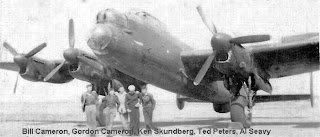
William Cameron entered Grade 9 at Scott Collegiate in Regina in 1942 and soon became a member of the Air Cadets squadron as required by the school curriculum. Bill’s stories for the third volume of the Flight: Stories of Canadian Aviation book series include his reminisces of patrolling several city blocks with the Regina District Civil Defence Corps, as a teenager, in case air raid sirens were activated and they needed to warn residents to turn off their lights.

Bill Cameron and friends with Lancaster bomber, Regina airport, 1945
Photo courtesy of William Cameron

Bill’s stories are three of the 33 stories in this third volume of the series, written by 15 Canadian writers including me. I wrote six stories about: Moose Jaw-based Laura Lawrence, the only commercially operating female aerial application pilot in Canada in 2017; Barb Stefanyshyn-Cote, who hadn’t flown over much water before she flew her aircraft from their farm in Leask down to Mexico and then Chile; Lisa McGivery, who had some annoying passenger experiences in her work as a flight attendant and now works as an aircraft maintenance engineer in Ontario; and Gerd Wengler, who transports rehabilitated owls and other creatures to safety and new homes in Manitoba and Ontario.

Flight: Stories of Canadian Aviation, Vol. 3 by Deana J. Driver and Contributors

Ken Wilson wrote about touring the Canadian Aviation and Space Museum in Ottawa with his father Ron just prior to the museum’s opening. Ron, a long-time pilot in northern Saskatchewan, noticed that the Beaver aircraft on display did not have a specific piece of equipment that would have been standard gear when transporting supplies for anyone staying in the bush. Ken made that suggestion to the museum curator, resulting in a change to the national museum’s Beaver display.

Retired journalist Will Chabun contributed three stories to this third volume of Flight, including details of annual vacations that Regina resident Jean Thomas took to France for 20 years as a member of the Royal Air Force Escaping Society. Co-founded by her late husband Hugh, the Society maintains contact and offers aid to those who rescued and sheltered RAF pilots like Hugh, whose plane was shot down during the war. The fiddle playing of Regina Symphony Orchestra’s Howard Leyton-Brown is also chronicled by Will Chabun.

Hugh and Jean Thomas, 1945
Story by Will Chabun, photo courtesy of Jean Thomas

The stories in the Flight series are not about the aircraft or flight terminology as much as they are about the people who had these adventures and incidents. My interest in these stories is in why they did what they did and what we can learn from those activities and experiences. I’ve already received submissions for Volume 4 of the series. Stay tuned.

Volumes 1, 2, and 3 of Flight: Stories of Canadian Aviation by Deana J. Driver and Contributors are available from www.driverworks.ca, Saskatchewan Aviation Museum gift shop, McNally Robinson Booksellers, Chapters, Indigo, Coles, Handmade Saskatchewan gift shops, SaskBooks, Amazon, and other select stores.

Tuesday, April 17, 2018

Creative Saskatchewan changes to book publishing production grant leave 40 Sask publishers out in cold


DriverWorks Ink is extremely disappointed that Creative Saskatchewan (CS) has chosen to stop accepting book publishing production grant applications for any book that is published with use of author funds. Due to this change in criteria and because of our business model, DriverWorks Ink will no longer be eligible to apply for book publishing production grants from Creative Saskatchewan. As a writer, author, editor, book publisher, entrepreneur, and former journalist, I am frustrated enough to write about this appalling, unexplained turn of events.

DriverWorks Ink is a hybrid book publisher that, since 2008, has worked in partnership with authors to publish books about Prairie people written by Saskatchewan and other Prairie writers. We have been successful in obtaining funding for more than a dozen books in the last five years. This makes it especially disheartening to be told that our product is no longer good enough to even apply.

Most of our books which received grant money returned a profit (income over production costs), and many of them were profitable within the first six months to a year. Our profits come from book sales, with authors receiving royalties from those sales. Our goal is profitability. Commercial viability is the original main goal of the production grant.

Six of these nine of our CS-grant-receiving books that were published with author investment have also won awards.

With Creative Saskatchewan’s announcement on April 16, 2018, the grant’s name also changed from Creative Industries Production Grant to Book Publishing Grant. In my jaded view, this more clearly singles out book publishing and, it feels to me, takes aim at significantly reducing the number of wonderful, important books published in this province. I will not say that it will sound a death knell to our book publishing industry – we are stronger than that – but it will change the landscape significantly. Not in a good way.

The new eligibility criteria for the CS Book Publishing Grant means that only five or six of the 45 book publishers in Saskatchewan will have eligible book projects. It means that 40 of the publisher members of SaskBooks/Saskatchewan Publishers Group, including DriverWorks Ink, will no longer be eligible to apply for book publishing production grant support from Creative Saskatchewan as most, if not all, of their published books include income investment from authors. Although we may still apply for funding to assist with marketing and business capacity development, many amazing Saskatchewan-based books will not be published because of lack of funds, and there will be little point in marketing or growing a business that has no new product.

The new criteria states that books with support from the Canada Book Fund (federal funding) may be eligible for “fast-track” approval without jury adjudication. Creative Saskatchewan’s website states: Our investments propel creative entrepreneurs as they create, innovate, expand, and perform, in their pursuit of commercial success.” While I support funding from provincial granting agencies for any worthwhile book projects, I am extremely concerned that this change to Creative Saskatchewan’s book publishing fund provides potentially guaranteed funding for book projects subsidized by other agencies and not even a consideration of funding for entrepreneur models that have a good book to publish which will sell commercially and add to the province’s GDP – which are three of Creative Saskatchewan’s mandated goals.

The Book Publishing Grant’s new criteria requires that eligible applicants must have been in operation for two years and have four eligible (read “with no author funds”) titles in print essentially blocks our industry’s growth because actual entrepreneurs and those starting in the industry have no access to funding support. It goes against why Creative Saskatchewan was set up in the first place.

This province, unlike the other jurisdictions in Canada, has never made a practice of supporting trade publishing (which is the general-audience scope for most of the DriverWorks Ink books), so trade publishing had to come up with an alternative model which includes hybrid and self-publishing.* (*See Addendum below.) That model in Saskatchewan has become an accepted practice in the industry across North America, but Creative Saskatchewan’s guidelines seem to be ill-advisedly supporting only publishing projects which may already receive product investment from the public sector. Why is that? 

I am concerned for the future of our vibrant book publishing industry in Saskatchewan, in which I have worked for the past 17 years. I have watched it grow in strength and quality and I am grateful to Creative Saskatchewan for assisting with some of that growth. More than 100 books are published annually in Saskatchewan – most of them by the smaller publishing houses. I fear that the numbers will decrease significantly because of this change in the grant program, important cultural books will go unpublished and businesses will close their doors.

When I was a board member of SaskBooks, the creative industry member organization for publishers in the province, I spent dozens of hours at the board table with various representatives of Creative Saskatchewan, many of whom had come to CS from other creative industries and knew very little about book publishing. I thought we had provided education on the diverse and commercially viable business models in the publishing sector and how our member publishers collectively believe that funds coming in from one source versus another is irrelevant to the stated goals of the grant – commercial viability and growing the province’s GDP. I thought we had proven time and again the value of our member organization’s programs and processes.


I love Saskatchewan, which is built on the entrepreneurial spirit, and I am deeply concerned by this withdrawal of support for valuable books produced by entrepreneurs. I ask Creative Saskatchewan to reconsider this decision.

Creative entrepreneurs focussed on the commercial success of their published books and businesses are being excluded from the publishing grant application process. It’s time to correct this error and do it quickly. We have stories to tell and we want your help to do so, Creative Saskatchewan. 


* Added April 18, 2018Every other provinces in Canada supports the publishing of trade books through various forms of provincial funding. For example, a publisher of tourism books in Alberta and British Columbia is eligible for provincial funding. In Saskatchewan, Parkland Publishing has published numerous award-winning, best-selling tourism books about Saskatchewan but is no longer eligible to apply for a book production grant. In Manitoba, a publisher who produces non-fiction trade books similar to those of DriverWorks Ink is eligible for provincial funding to help with infrastructure and business expenses. There is no such support from the Saskatchewan government for DriverWorks Ink or other small publishers. Business models such as hybrid publishing or self-published-author publishing grew here to keep the industry active and to publish more Saskatchewan-based books for our readers.

About 30 authors per year plus numerous artists, graphic designers and printers are affected by this withdrawal of Saskatchewan funding availability. Recently, the Writers Guild of Canada opened up membership eligibility to self-published authors. The library system in Greater Vancouver launched a campaign of awareness of self-published authors because they noticed so many self-published books of quality coming into their libraries. The change is happening across Canada to recognize books based on content and quality, not on input funding methods. Self-published authors and hybrid publishers have submitted production grant applications to Creative Saskatchewan in the past only for books of quality that are marketable and will turn a profit, as required by the former criteria. It is irrelevant whether the publisher's funding comes from a federal grant, the business itself, a gift of funds, a GoFundMe page, or somewhere else.

Please share this information. Please comment on it.

Please support all Saskatchewan publishers (and our authors), including hybrid publishers and self-published authors.

Please contact Creative Saskatchewan, your local media, the Ministry of Parks, Culture and Sports, and/or your local and provincial politicians to tell them you want funding continued for all Saskatchewan publishers, without discrimination against their business models or input funding methods.

A Regina Leader-Post newspaper article about the cuts is here.