Author and publisher of stories about fascinating Prairie People and unsung Canadian heroes

Welcome to the blog of Deana Driver - retired author, editor, book publisher and freelance journalist. Deana retired in 2026 and closed her business, DriverWorks Ink, which published stories of inspiring, fascinating Prairie people and unsung Canadian heroes written by Prairie authors, including Deana Driver. DriverWorks Ink also published genres of healing and wellness, rural humour, and children's historical fiction.

Tuesday, June 14, 2022

Publishing books and sharing the stories of others is no ordinary thing

I’ve spent most of my adult life writing or editing or designing newsletters or book layouts, or publishing and selling books, and I sometimes forget how cool that is. 

So far, I've written five non-fiction books and contributed pieces to more than a dozen other books. And I've published more than 70 books written by 50 or 60 (mostly Western) Canadian writers. That's been my life since I wrote my first book in 2001.
 
My adult daughters sometimes remind me that “most people don’t do this, Mom. They don’t go to a bookstore to sign the books they’ve written.”
 
I've also been reminded that most people aren’t interviewed by the media about what they wrote or published either. Because I was a journalist doing the asking of the questions for 30 years, it was a little strange to suddenly be on the other side of the interviews when I began writing and publishing books, but I quickly got used to it. And since I prefer to put together books that are either fascinating true stories or based on such, members of the media regularly invite me or my authors to talk about our books. Which is wonderful. But, I suppose, not "normal". 

Again, I forget this sometimes ... until I receive a rather panicked call from an author who is facing their first media interview. I then take them through a "pretend interview", with me being the interviewer, and we both relax a little. Usually, it works out well.

So this is the unique sort of world in which I live and work.

But once in a while, I have an interaction with an author or one of the contributing writers for one of the anthologies I've been publishing recently, and I remember the importance and impact of my work again.

Case in point: At a recent open house for the Regina Flying Club, Mason Adam Wray came up to me and introduced himself. We'd talked by email and by phone last year when I edited and published his story (in Volume 3 of the Flight: Stories of Canadian Aviation book series) about sneaking out of a cadet camp in Alberta to check out a derelict aircraft in a nearby "boneyard". 

Mason is a smiley, positive guy who hosts a YouTube channel called Wings of the Prairies. He LOVES aircraft! It was great to meet him in person. We took some photos together and visited off and on throughout the afternoon. 

Mason Adam Wray (left), Deana Driver, and Canadian Aviation Historical Society president Gary Williams at the Regina Flying Club, June 2022

Then Mason told me something that made me stare at him, mouth open, in awe.

He said his complimentary copies of Volume 3 of Flight: Stories of Canadian Aviation had arrived in his mailbox on the day of his wedding.

On his wedding day, people! What kind of crazy timing is that?

He added that his family passed the book between themselves for that entire day and remarked on how proud they were of his achievement in being a published writer.
 
Wow.
 
Let me never forget that story and the beautiful trickle effect of my work.

What I do for a living is not ordinary. Not even close. 
The books that others and I write and that I publish add significant substance, historical record, and pleasure to readers and to the fabric of Prairie and Canadian culture.

I am often humbled by the people whose stories I share through my writing and publishing efforts. I am honoured that they trust me to do that storytelling. 

I never forget that!


Tuesday, May 24, 2022

How I published a book by Gridiron Greats Hall of Famer Jim Hopson

On May 20, 2022, Jim Hopson, a Canadian Football Hall of Famer, was inducted into Mike Ditka’s Gridiron Greats Hall of Fame at a banquet in Chicago.

Former Chicago Bears NFL coach Mike Ditka’s Hall of Fame recognizes NFL and CFL personnel for their player contributions and charitable work off the field. Jim was president and CEO of the Saskatchewan Roughriders for 10 eventful and successful years, and has volunteered for numerous community organizations including the Saskatchewan Brain Injury Association.

This is the story of how I published a book written by the indomitable, inspiring Jim Hopson.

Running the Riders  - My Decade as CEO of Canada's Team by Jim Hopson with Darrell Davis

One day in early 2015, Darrell Davis, a former long-time sports writer for the Regina Leader-Post, phoned me to inquire about my interest in a book project. “Jim Hopson wants to write a book,” Darrell told me. “I said I would help him. Do you want to publish it?”

The conversation wasn’t as simple as that, and I have liberally paraphrased what we discussed, but that was the gist of it.

I was immediately intrigued.

Anyone who knows anything about sports in Saskatchewan knows the name “Jim Hopson”. Not just that he is a former football player who then led the Riders organization through some turbulent times and toward a profit and a couple of Grey Cup wins during his CEO period, but he is also known as a good guy and a fan favourite. Jim is a big man with a big, friendly personality, who gets things done.

I quickly conversed with my husband, Al, who was helping me in my publishing business at the time. Al would have to agree to this project since he would be the main person to edit this book.

You see, Al had been a copy editor in the sports and news departments of the Regina Leader-Post for decades prior to taking early retirement from his news editor position in 2008. Al was also a sports geek. He could happily spew a long list of sports statistics (alongside his sports editor colleague Rob Vanstone and others at the newspaper), and he had also edited hundreds of Darrell Davis's sports stories over the years as well as two books, Saskatchewan Roughriders – First 100 Years and Regina Pats – A Winning Tradition, for which Darrell Davis was a co-author. I was not surprised when Al quickly signed on to help with this book, which we would come to call Running the Riders: My Decade as CEO of Canada’s Team by Jim Hopson with Darrell Davis.

I had met Jim Hopson briefly at one point prior to this project, but Al knew him on a more personal level. They had both gone to the same high school in Regina and were on the same football team, with Jim a few years ahead of Al. When Jim and his wife Brenda later sent me photos to include in the Running the Riders book, it was a delightful surprise to find the teenage Al peering out of a 1968 Thom Trojans team photo, sitting two rows back and to the left of Jim, who was happily occupying the centre spot in the front row.
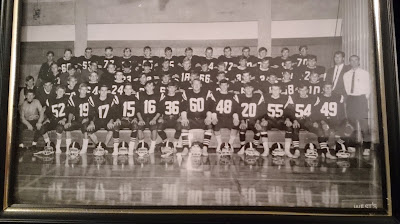
1968 Thom Trojans team photo. Jim Hopson is front row centre, #60.
Al Driver is third row, fifth from the right.

By the time Darrell called me in early 2015 about this proposed book project, he had already worked with Jim on creating an outline of the book and Jim had written several chapters in longhand. This handwritten method worked best for Jim, and as Darrell later typed Jim’s words into a computer, Darrell was able to adjust them where needed and add some sports statistics to complete the story.

Shortly after Al and I agreed to take on the project, Darrell provided me with a synopsis, which became the description on the back cover of the Running the Riders book: 

The Saskatchewan Roughriders were mired in mediocrity, a decent football team that couldn’t advance to the Grey Cup as the franchise worked its way out of financial distress and tried to reconnect with its fan base. In 2004, offensive lineman-turned-educator Jim Hopson was hopeful that the Roughriders directors would hire him as the team’s first full-time president and CEO. He believed that the team, with its incredible fan base, could become a successful business that consistently posted strong annual profits while playing in and winning multiple Grey Cups.

And it happened. After a decade under Hopson’s leadership (2005 to 2015), the Roughriders became the Canadian Football League’s strongest franchise, appearing in four Grey Cup games (winning twice) and selling more team merchandise than the other eight CFL franchises combined. They obliterated their debt and posted a record-setting profit of $10.4 million after winning a hometown Grey Cup in 2013, which has been described as the biggest moment in the 105-year-old team’s history.

Hopson’s book, with the assistance of Darrell Davis (an author and long-time sports writer and Roughriders beat writer at the Regina Leader-Post), describes Hopson’s business plans, the resistance to change within the organization, the interplay with the fans of Rider Nation, difficult decisions made, and the euphoria of winning two league championships.

An emotional man with a firm disposition, Jim Hopson describes the highs and lows that went along with the job and the path he took, professionally and personally, to the biggest office with the franchise known as ‘Canada’s Team’.”

A few months after that initial phone call, Al and I met with Darrell and Jim at a nearby pub to sign our publishing contract and talk more about the project. These three men regularly veered off topic and exchanged tales of the good old days of playing the game, who they each knew, and how those people are doing these days. I didn’t mind. After all, I’d lived with Al for almost 40 years, so I was used to frequent forays into the sports world. He’d taught me all about high school football early on in our marriage, when he was covering that sport for the newspaper, and we’d had season tickets to Riders games in the 1980s – when I found that the most interesting thing on the field was often the players’ butts. Yes, I said it, and it still holds true. The 1980s were not the best years for the Saskatchewan Roughriders. And we were paying a babysitter at the time too – but that’s another story.

Now, back to the meeting with Jim and Darrell…

It was swell. It was a fun get-together that also accomplished our goals of sorting out details of the book’s style, format, selling locations, and more.

DriverWorks Ink publisher Deana Driver with Jim Hopson, Darrell Davis, and Al Driver, ‎June ‎20, ‎2015

The timing was right to publish a book about Jim’s career. He had just retired from the Riders organization and had left the team in a strong position, financially and on the field. We wanted a book out by that fall, in time for Christmas gift-giving, so we worked hard and fast.

I contacted Ian Hamilton, another Leader-Post sports writer, to help Al and me edit the book. He agreed and we were grateful for his additional eyes on the manuscript. Bill Dubecky of Royal Studios had been the Riders’ photographer for decades, and he graciously supplied many photos to use in the book. Erika Folnovic, a local artist, created the beautiful cover design. The Saskatchewan Roughrider organization gave us permission to publish some of their photos and use their team colours, and they later sold books in their stores across the province. Creative Saskatchewan provided us with a book publishing grant to assist with costs. To all these individuals and organizations, we are grateful.

Bad news came in August 2015, at the height of production, when Al was suddenly diagnosed with Stage IV colon cancer. He – and we – decided to fight it and to stay positive. Amid his stints in and out of hospital, our work continued on the book.

Al Driver editing the Running the Riders book Oct 2015

Al edited the final manuscript in early October as Ian and I met and compared notes on the typos or other details we’d each found that needed correction. I put all the pieces together and sent the layouts to Houghton Boston Printers in Saskatoon, a printer we work closely with on most of our nonfiction books. We had a book in our hands on October 30th, 2015!

Jim Hopson and his wife, Brenda Edwards, and co-contributor Darrell Davis see their new Running the Riders book.

The Running the Riders book was a big hit!

We had to order a reprint after selling 3,400 softcover books in only two months – an extraordinary accomplishment for a little publishing house, but not surprising given the story Jim and Darrell told. We also created hardcover and e-book editions of Running the Riders, which puts our book into the Canadian national bestseller category with more than 5,000 books sold.

Bad news struck again last year when Jim Hopson was diagnosed with Stage IV colon cancer. Strangely, it is the same illness that took Al in early January 2016, but their cancer stories are not the same.

Jim Hopson recently spoke publicly about his cancer diagnosis to Murray McCormick of the Regina Leader-Post in this article about his Gridiron Greats Hall of Fame induction. 

I’ve chatted with Jim a few times in this last year, and I continue to wish him and his family all the best. Anything I could have said that would be helpful, I have said to Jim.

Cancer sucks. That’s a supreme understatement.

Jim Hopson signing more Running the Riders books, Sept. 2021

It has been and is fun, lots of laughs, and quite an honour to work with Jim and Darrell and their Running the Riders book. None of us could have imagined the journey this would take us on, but I know we are all grateful that we came together for this project. Oh, the things we have enjoyed, learned, and shared.

The last words in this blog post go to Darrell Davis and Jim Hopson, as I quote from the epilogue in their Running the Riders book:

Hopson understood his position put him in the forefront of a franchise whose every move is scrutinized, yet he never ducked a question or avoided an issue. When Hopson said he wanted me to help him write this book, I asked him why he chose me, considering that we often had conflicting viewpoints during the years we worked “together.” He said he wanted to write an honest book, but he also wanted to be challenged while relating his uplifting, positive story of growing up in Regina to become the Roughriders’ president. He ultimately gave the book to me on hundreds of hand-written pages for typing and “embellishing.”

That’s how I describe my contributions, considering that I had already written about many of his Riders adventures as part of my newspaper work.

“It was important that when the book was done, people would say it was credible,” Hopson says. “I didn’t try to gloss over the bad stuff by just talking about the good. We had our challenges and there’s no way I would present myself as always making the best decision. I made more good decisions than bad decisions, but if you’re going to be a leader, you had better expect that you’re going to have challenges.”


(Signed copies of Running the Riders by Jim Hopson with Darrell Davis are available here.)


Thursday, April 14, 2022

Prairie Veterinarian Tells Entertaining Stories of his Work with Animals and Their Humans

In April 2021, I received an email from Dr. Gary Hoium, a veterinarian in Weyburn, Saskatchewan. Gary had begun writing amusing, intriguing, and insightful stories about his decades of experiences as a mixed-animal veterinarian. He asked me about the possibility of publishing those stories.

We met a couple months later in my backyard in Regina. 

Don't They Kick When You Do That book with author Dr. Gary Hoium
 
We immediately felt a connection. Aside from the fact that Prairie people are generally friendly folks who are community oriented and have great stories, people from the Weyburn area have occupied a special spot in my heart for decades.

The first book I ever wrote was Just a Bunch of Farmers: The Story of Weyburn Inland Terminal, 1976-2001. That book project was so much fun and the people I interviewed for that book so terrific that it encouraged me to seek out more Prairie stories that should be made into book form. Since then, I have jokingly blamed the Weyburn Inland Terminal folks for the more than 70 books I've since published (written by myself and other Prairie authors) which cover my work and living spaces.😄 

So, yes, Weyburn people and their stories will always be of particular interest to me.

But back to that day last June...

While in my backyard, Dr. Gary Hoium and I discussed his numerous stories and the ways we visualized his book taking shape. We went to work immediately and planned to have a book in our hands by that fall for pre-Christmas gift buying. The timeline was tight, but we did it.

With the help of a co-editor (Gary's niece Courtney Hinz), a cover designer, and several publisher colleagues and consultants, we released Don't They Kick When You Do That? Stories of a Prairie Veterinarian in October 2021. The book has already been so popular that we are considering reprinting this fall.

What's in the book and why is it so wonderful? Let's hear from the author himself.

This is what Dr. Gary Hoium wrote for a "Read My Book" piece in the Regina Leader-Post's QC Magazine:

“How long did it take you to write this book?” a young lady asked at a recent book signing.

Looking up, I smiled. “About 40 years,” I replied.

She laughed.

Ride along and accompany me on my journey as a mixed-animal, rural Saskatchewan veterinarian.

My book has been called “an enlightening, humorous, intriguing, educational compilation of true adventures, experiences, mishaps and rousing successes that are sure to captivate and entertain.”

If you love animals… this book is for you. If you ever owned a pet or owned, managed or cared for livestock of any kind… this book is for you. If you ever had any thoughts or wonderment as to what a life (possibly even your own life) might have been like as a rural Prairie veterinarian… this book is for you. Your farmer/rancher dad or husband doesn’t read books? Based on many testimonials, he will read this one, laugh a lot, and love it!

As veterinarians, we are tasked with serving all the medical, surgical and welfare needs of a very diverse animal kingdom. Our motto: “If you do no good… do no harm.”

Learn how one evening, a clump of four grey fox squirrels, entangled and stuck tightly together by their tails, taught me the importance of compassion. The story went viral across our nation in days.

Extracting porcupine quills from a German shepherd resulted in my painted portrait, me in my green scrub suit, being distributed in a book worldwide.

You can live in my boots through the most fearful, dangerous, and stressful noon hour of my career when an 1800-pound, wild-eyed, aggressive bull escaped my inner-city clinic and landed in a resident’s backyard. Flanked by an elementary school on one side and a comprehensive high school on another, students (targets) aplenty, this had the very real potential to turn out REAL BAD!

You will be introduced to a couple of compelling real-life characters. Terrible Terry … or was he? As an experienced “jailbird” fighting personal demons, he frequented our clinic and befriended me, and ultimately, me him despite many crazy encounters.

Cousin Jimmy will leave you laughing and craving more.

From cattle to hogs, cats to dogs, the creatures and the men and women who love them have wormed their way into my heart and my stories.

And do they kick when I do that? The surprising answer is .....?

Don’t They Kick When You Do That by Dr. Gary Hoium is available from www.driverworks.ca, McNally Robinson Booksellers, Chapters/ Indigo/ Coles, Handmade Saskatchewan gift shops, SaskBooks, Amazon, and other select stores.

Friday, January 7, 2022

Third Flight book shares more Canadian aviation adventures

William Cameron entered Grade 9 at Scott Collegiate in Regina in 1942 and soon became a member of the Air Cadets squadron as required by the school curriculum. Bill’s stories for the third volume of the Flight: Stories of Canadian Aviation book series include his reminisces of patrolling several city blocks with the Regina District Civil Defence Corps, as a teenager, in case air raid sirens were activated and they needed to warn residents to turn off their lights.

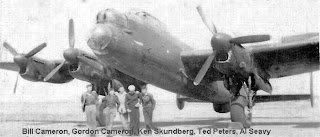
Bill Cameron and friends with Lancaster bomber, Regina airport, 1945
Photo courtesy of William Cameron

Bill’s stories are three of the 33 stories in this third volume of the series, written by 15 Canadian writers including me. I wrote six stories about: Moose Jaw-based Laura Lawrence, the only commercially operating female aerial application pilot in Canada in 2017; Barb Stefanyshyn-Cote, who hadn’t flown over much water before she flew her aircraft from their farm in Leask down to Mexico and then Chile; Lisa McGivery, who had some annoying passenger experiences in her work as a flight attendant and now works as an aircraft maintenance engineer in Ontario; and Gerd Wengler, who transports rehabilitated owls and other creatures to safety and new homes in Manitoba and Ontario.

Flight: Stories of Canadian Aviation, Vol. 3 by Deana J. Driver and Contributors

Ken Wilson wrote about touring the Canadian Aviation and Space Museum in Ottawa with his father Ron just prior to the museum’s opening. Ron, a long-time pilot in northern Saskatchewan, noticed that the Beaver aircraft on display did not have a specific piece of equipment that would have been standard gear when transporting supplies for anyone staying in the bush. Ken made that suggestion to the museum curator, resulting in a change to the national museum’s Beaver display.

Retired journalist Will Chabun contributed three stories to this third volume of Flight, including details of annual vacations that Regina resident Jean Thomas took to France for 20 years as a member of the Royal Air Force Escaping Society. Co-founded by her late husband Hugh, the Society maintains contact and offers aid to those who rescued and sheltered RAF pilots like Hugh, whose plane was shot down during the war. The fiddle playing of Regina Symphony Orchestra’s Howard Leyton-Brown is also chronicled by Will Chabun.

Hugh and Jean Thomas, 1945
Story by Will Chabun, photo courtesy of Jean Thomas

The stories in the Flight series are not about the aircraft or flight terminology as much as they are about the people who had these adventures and incidents. My interest in these stories is in why they did what they did and what we can learn from those activities and experiences. I’ve already received submissions for Volume 4 of the series. Stay tuned.

Volumes 1, 2, and 3 of Flight: Stories of Canadian Aviation by Deana J. Driver and Contributors are available from www.driverworks.ca, Saskatchewan Aviation Museum gift shop, McNally Robinson Booksellers, Chapters, Indigo, Coles, Handmade Saskatchewan gift shops, SaskBooks, Amazon, and other select stores.

Tuesday, December 7, 2021

Fun On The Farm 3 book the last in the series

 A couple years ago, I was selling my DriverWorks Ink-published books at a craft show in Swift Current when a man walked by and yelled at me: “When are you doing another Fun On The Farm book? I really enjoy those!”

Fast forward almost three years, in the midst of a global pandemic, and here it is. Bring on the laughter!

Fun On The Farm 3: True Tales of Farm Life adds another 32 short stories and six poems to those of the first two volumes of the series, with more amusing antics, accidents, surprises, and laughs about growing up, living, or working on Western Canadian farms. Twenty writers, including me, have contributed to this volume.

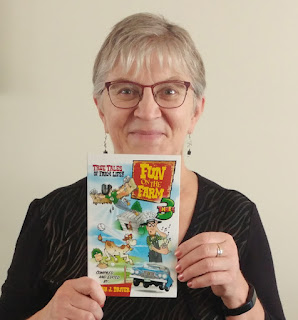
Author /editor/ publisher Deana J. Driver with Fun On The Farm 3

The stories include how I learned to drive a car in a grain field in Alberta at age 12, played in a culvert on our farm as a kid, and watched high school friends of my husband go a little goofy during our rural wedding a few decades ago. My sister Leanne Pacholok and brother Alan Pacholok talk about their adventures too, including Leanne’s Poohsticks games through that same culvert, and Alan’s numerous antics and accidents that ended with minimal damage to him, but not to our mom’s prized plate from Poland.

Shellbrook author Laurie Lynn Muirhead shares stories of how her brother showed off his “flying” skills and how she nurtured a runt piglet to its full size. Saskatoon writer Marilyn Frey contributed five stories to Fun On The Farm 3, telling of riding a pig, Sunday ball games, crop circles, and more. Brad Hauber of Lloydminster recalls picking rocks, winter sports, and the benefits of having younger brothers. The contributing writers include three authors whose work I’ve published: Mary Harelkin Bishop has stories of garden gumbo and a friend’s rocky awakening, Janice Howden explains her dad’s “crash” nickname, and Bryce Burnett’s poetry gives glimpses of farm life. Other contributors are Cheryl Crashley, Elias Entz, Jean Fahlman, Keith Foster, Becky Gamble, Ron Krenn, Theodore Mikolayenko, Karen Ollinger and Eldon McDougald, Rev. Dr. Joyce Sasse, and Jean Tiefenbach.

This is the final book in the Fun On The Farm series celebrating the sense of humour that Western Canadian farmers often utilize to get through the hard times and cherish the good times.

Fun on the Farm 3 books are available at www.driverworks.ca, McNally Robinson Booksellers, Indigo, Chapters, Coles, Handmade Saskatchewan gift shops in Regina and Saskatoon, SaskBooks, Amazon, and other select stores.

Signed copies of Fun On The Farm, Fun On The Farm Too, and Fun On The Farm 3 are available at a Book Bundle sale price from www.driverworks.ca/shop.html


Wednesday, November 10, 2021

Remembrance - Bob and Sue Elliott and their Little Coat

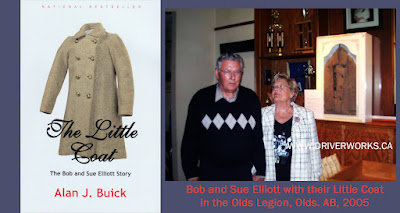
Every year since November 2009, when I published Alan J. Buick’s book The Little Coat - The Bob and Sue Elliott Story, I can’t help but think of Bob and Sue Elliott on Remembrance Day.

They were unsung Canadian and Dutch heroes of a sort. Until Alan’s book, of course, which helped thousands of readers worldwide learn their names and something about the sacrifices made by them and people like them who served in and/or lived through the combat zones of the Second World War.


Bob enlisted in the Canadian Army in Calgary when he was only 15 years old. My oldest grandson is close to that age now and I can’t imagine the fear and worry of being unable to do anything but watch that young man go off to war as Bob did, having told recruiters that he was 20 years old and wanted to follow in the footsteps of his older brothers.

By age 19, Bob Elliott was a tank commander in the Canadian Army and was fighting the German army in the Netherlands. There, he met a feisty, 10-year-old Dutch girl named Everdina “Sussie” Cretier. Sussie had earlier saved her father from a German firing squad and their whole family had just escaped to the safety of the Canadian army after running across a field dotted with landmines.

Sussie - soon known as Sue - became a good-luck charm for the Canadian soldiers, especially those in Bob’s troop, who wanted to give her a Christmas gift. On Christmas Day 1944, Bob presented Sue with a child’s coat that the soldiers had asked a local seamstress to sew out of a wool Canadian Army blanket. The buttons on the coat came from the soldiers’ tunics.

Sue cherished that gift and kept it for decades, long after she and Bob reconnected and she moved to Canada to be with him. Alan Buick saw the coat on display at the Royal Canadian Legion in Olds, Alberta, and began asking questions about it - which led him to write his award-winning book, The Little Coat.

Bob Elliott passed away in February 2013.

We learned today that Sue Elliott passed away in May of this year. We express our heartfelt condolences to their families and all who loved them.

I was privileged to meet and talk with Sue and Bob during our launch of The Little Coat book from the Royal Canadian Legion hall in Olds, Alberta in November 2009. They connected with us by video, long before that became an everyday occurrence. Alan Buick and I were thrilled that the subjects of Alan's book could participate in our launch and visit with their family members and friends in the audience via video chat. 

In 2013, I was thrilled to meet Sue in person in the Netherlands, when I travelled there on a vacation with my late husband, Al. I wrote a blog about that adventure, from the perspective of the book talking to us. It was great fun and Sue was, as always, energetic and full of laughter.

Bob and Sue’s story and sacrifices will never be forgotten. Nor will those of thousands of others who served and placed themselves in danger in the name of freedom.

We will remember them. Rest in peace, dear friends.


Bob and Sue Elliott in 2010 with a tank
resembling the one Bob used in the war

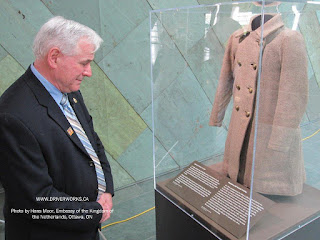
Alan Buick, author, views The Little Coat ("child's coat")
on display in the Canadian War Museum, Ottawa, 2010

-----------------------------------

More of my blog posts about Bob and Sue Elliott:

Seeing this "Little Coat" inspired a country singer to write an award-winning book, Dec 2017

Viewing The Little Coat at the Military Museums, Calgary, Alberta, August 2015

Liberation Day Netherlands 70th Anniversary and The Little Coat book, May 2015

Remembrance - Bob Elliott and The Little Coat book, Nov 2014

From Blanket to Coat to Book to Painting, June 2013

The little coat is 67 years old! Dec 2011

Sunday, September 19, 2021

A Moose, A Fence, A Farmer, and A Power Saw

While interviewing my brother, Alan Pacholok, months ago about funny things he's experienced on the farm  so I could include those stories in the new book Fun On The Farm 3  Alan told me about an encounter he had with a moose. I wrote the story and then decided it didn't quite fit for the Fun on the Farm book series. It seemed like the perfect story for a blog post. Enjoy!

Two of my younger siblings, Alan and Leanne Pacholok (far left and far right),
 laugh at the antics of some cousins during a Pacholok family reunion, 2015


The farm I grew up on is in a forested region of central Alberta on land that required my ancestors – and me as a kid – to clear away trees to create usable farmland. Wild animals, especially moose, are common there.

My brother, Alan Pacholok, owns and operates that farm now and he has been known on many occasions to improvise in the maintenance and repair of farm equipment and buildings. For decades, my sisters and I have teased him that he’s a “duct tape and binder twine” kind of repairman. 

This use of ingenuity and adaptability is common among farmers, who have limited time in which to get their crops or cattle production accomplished due to weather, finances, and distance from other resources. So farmers sometimes have to make due with what is in the garage, barn, or vehicle just to get the job done. It’s a skill every working farm kid learns early on.

One sunny Saturday afternoon in the late 1990s, my brother was returning from a road trip he took to a farm near a neighbouring town, where he had gone to do some prep work on a granary he’d purchased. As Alan drove back towards our town, he saw a young moose stuck in a barbed wire fence that was beside the highway.

Vehicles were passing by this scene and my brother did too, but only for a split second before he turned his half-ton around, drove into the ditch, and got out of his truck to peruse the situation.

This wasn’t the first time Alan had seen such a predicament. He’d rescued a couple other moose from a similar fate before.

When moose try to jump a barbed wire fence, Alan told me, their front feet go over the top wire, but sometimes their back feet catch on the top wire, pushing it forward so their feet go down in front of the second wire of a four-wire fence. That second wire moves up with the force and acts as a lasso with the top wire, trapping the animal in place.

This particular moose was trying frantically to move ahead and was pulling on the wires, which were not budging. Alan knew that without help, this animal would perish.

Unlike our dad, who enjoyed hunting in almost every year that he could, my brother was never interested in this form of wild game. But this poor moose didn’t know that.

As Alan approached the frightened creature, he saw the fear in the animal’s eyes. And those eyes only got bigger when Alan started up the only utensil he could find in his truck – a power saw.

“The only tool we really had in the truck back then was a tire wrench,” Alan said. “We never took tools in the truck and I didn’t need them that day anyway. I had to take a couple two by sixes to Boyle to brace up a granary I bought and look at how to haul it home. I just had a power saw to cut the boards. To get this moose out of the fence, all I needed was a pair of pliers to cut the wires or two rocks, but I couldn’t find those anyway. The power saw was all I had,” Alan said with a grin.

“No nails, no wrenches, just one moose caught in the top two wires of this fence,” which, coincidentally, happened to be on the property of one of our uncles – but that’s rural Canada for you.

So, my brother grabbed his power saw and walked toward the hung-up animal. Alan could see that the moose had been fighting to get free for awhile before he arrived. The wires had rubbed some hair off its hind ankles, but there weren’t any cuts on the animal’s legs, which was comforting for both Alan and the moose.

By now, they had an audience. Several vehicles had stopped on the highway and people were standing on the roadside, waiting to see what this man in the pickup truck was planning to do with this 600-pound handy bundle of Grade A moose meat.

With his power saw in hand, Alan stood as far away as possible from the trapped moose – which was only about two feet given the 10-foot distance between fence posts and the mid-sized moose in the centre. Alan tried to start his power saw. It made a quick, loud broooomm noise, and then stopped.

The noise startled the moose. It squirmed faster and tried harder to get away – with no success. It looked at Alan from the corner of its bulging eyes.

Alan tried to start the power saw again – with no success.

Several times, Alan tried to start the saw. Each time, the noise frightened the animal even more and its shaking intensified.

The moose kept turning its head toward the offending – but possibly helping? – human at its side, no doubt wondering what would happen next.

Finally, Alan got the saw going and began to cut the first wire. Sparks were flying everywhere, adding further to the moose’s fear and the spectacle for the onlookers.

There were about a dozen vehicles stopped on the side of the highway by this time. There was no mass use of cellphones or YouTube videos in those days, just human eyeballs watching a man with a moose and a power saw.

After Alan cut through the first wire, it did not free the moose, so Alan started sawing the second wire. The moose was still desperately trying to get away.

Now there were about 20 vehicles on the side of the highway, watching this commotion.

Alan finally got the second wire cut and the moose was loose.

It walked away slowly, with a slight limp. “It kind of looked back to thank me and was probably wondering if I was nuts, getting that close to it… I had to do it because it was suffering,” Alan added. But yes, there are those of us who would say Alan is a little crazy.

As the moose stopped shaking and regained some energy, it slowly trotted further and then ran across the field. The bystanders drove away and Alan put his power saw back in his truck and drove away as well, thinking about the moose and the look in its eyes.

“As I was cutting those wires, the poor thing was shaking. Later, I realized that probably everybody watching was laughing, thinking, ‘What is he doing with the power saw?’ ... That poor moose didn’t think it was funny.”

No, my brother will never forget that moose. “I think he smiled at me. He was probably thinking, ‘Thanks for not turning me into a sandwich.’”


Thursday, August 19, 2021

It’s Only Hide and Seek If They Look For You

Grandparenting Tip of the Day:

When playing multi-generational hide and seek, choose your hiding spot carefully.

I spent some precious time with my grandchildren this week, after a rough year of very little contact due to the pandemic. It was glorious fun!

On a couple of occasions, we engaged in some entertaining rounds of Hide and Seek. The adults hid alongside the kids and we had a lot of laughs and “difficulty” finding the littlest ones at times. (Little kids are very good at hiding, you know – even when they repeatedly tell you exactly where they’re hiding!)

During the last round of the last game before everyone went home, I decided to cleverly hide in a spot that none of the kids had used yet – behind a set of long drapes in a bedroom.


The game went off the rails soon after that.

The eight-year-old was the “seeker”. He found the two-year-old and the eleven-year-old, and had come into the room where I was hiding, but he didn’t see me.

Then there was no movement or sounds of any seeking going on.

After a long number of minutes, the 13-year-old and the almost-five-year-old called from the basement to let the seeker know, “We’re down here!”

No response from the seeker. Or the other two.

I kept listening and couldn’t hear any sounds except for the gentle conversation between the two who had been found – with the little one telling her bigger cousin that she loved him.

Then the 13-year-old and five-year-old took turns coming partway up the stairs to loudly yell that “We’re in the basement!”

No response from the seeker.

“What’s taking them so long?” the five-year-old asked her older cousin, who finally came all the way upstairs – only to find out that the seeker had to stop mid-seek because he had to go to the bathroom.

Hmmm… Now I, the grandma, had a decision to make.

Should I abandon my excellent hiding spot and go visit with the parents of these kids or should I stand firm and wait until the game resumed?

Well, I’m no quitter.

So I stayed.

I stood awkwardly behind the drapes, trying to ignore the cramping in my left calf muscle and then my right. I also tried not to cough or sneeze or breathe too deeply.

I glanced at my Fitbit. Probably 10 or 15 minutes had gone by since I had last heard any commotion that resembled “seeking.” What to do, what to do…

I finally heard the bathroom door open and then the combined voices of the older kids and the younger kids … and the seeker!

No! It couldn’t be!

They’d abandoned the game and had forgotten about Grandma!

A few minutes later, I decided I actually was a quitter after all – in this situation anyway.

I came out of the bedroom and said to the kids gathered together in the next room, “I guess the game is over. And you didn’t find me.”

There were looks of surprise, shock and dismay when the older ones asked, “Were you hiding?” and I answered, “Yes. All this time.”

Then there were many looks of embarrassment among the older kids, especially the little seeker.

Oops.

To his defence, I had not been playing in every single game, so it was a little harder to remember whether he was supposed to find me or not. Anyway… we smiled and carried on.

I still love them all dearly, but it will be awhile before I find a super great hiding place again.

Next time, I’ll go back to sitting in the middle of the floor with a blanket haphazardly thrown over my head. They’ll surely find me there, right?


Friday, August 6, 2021

A great time at Tunnels of Moose Jaw

Saskatoon author Mary Harelkin Bishop and I had a terrific day at the Tunnels of Moose Jaw recently! We made some exciting plans for a fun launch this fall of Mary's second book in the Moose Jaw Time Travel Adventures series - Tunnels of Terror - being updated and republished by DriverWorks Ink, and then we checked out their newly renovated Chicago Connection tour. What a treat!


Editor-publisher Deana J. Driver and author Mary Harelkin Bishop in Moose Jaw, Saskatchewan

Editor-publisher Deana J. Driver with Kelly Carty of the Tunnels of Moose Jaw and author Mary Harelkin Bishop in Moose Jaw, Saskatchewan

As we ended the tour, a family was purchasing one of Mary's books from the Tunnels' gift shop - so I proudly told them that the woman beside me is the talented author of that book. They were delighted to have Mary sign the book for them.

Author Mary Harelkin Bishop signs a copy of her Tunnels of Moose Jaw series

We then spent a few minutes on the phone talking with the talented artist and illustrator for this series, Wendi Willett Nordell. We just HAD to include her in our photo - she's part of our amazing team!

Editor-publisher Deana J. Driver and author Mary Harelkin Bishop chatting on the phone with the artist/illustrator Wendi Nordell (added by the magic of technology) while in Moose Jaw, Saskatchewan


Stay tuned for the republished next book in the series - Tunnels of Terror: Moose Jaw Time Travel Adventure #2 - coming in late September. We can't wait to share it with you.


Friday, July 23, 2021

Making room for book babies

You know how, when some women are expecting a baby, they have to get the nursery ready before the little one arrives? 

Well, I'm expecting five new "babies" in the next two months  in the form of new books by various authors, including pieces I've written in two of the books.

So I had to get the "room" ready  aka my garage.

Here's the "before" picture of part of my garage:


And after two hours of moving boxes of books, organizing and cleaning up...

Voila! 


And I sold the desk too! It had served our family well for a couple decades and has gone to a new home, where it will be lovingly used in another home-based business. How cool is that?


Speaking of cool...

During the two-hour moving period, the temperature cooperated (not at all), going from a steamy 30 degrees Celsius down to a balmy 28. At 10 p.m!

Ah, Saskatchewan in the summer... 

But the "room" is ready.

Of course, I have to finish putting the book layouts together and getting them sent to the printer etc., but let's just call this "nesting", shall we? 


(Stay tuned for news about the books and to meet their authors.)


Wednesday, May 12, 2021

Brandon Legion member and subject of children's book fondly remembered

The editor of The Brandon Legionnaire Newsletter contacted me, asking permission to run a story about my book The Sailor and the Christmas Trees. The late John Hanlon of Brandon, Manitoba is the subject of this book which was written for children but is also loved by adults.

In November 1944, John was a wireless operator on the HMCS Royalmount. They were docked in St. John's, Newfoundland. He knew they'd be at sea on Christmas Day, so he and a couple crewmates walked up a hill and cut down some evergreens. John hid the trees on the ship and pulled them out on Christmas morning in the middle of the Atlantic Ocean to surprise his crewmates and children who were on another ship in that convoy. 

John's gift made that wartime Christmas into a very memorable day.

John told this story to his children, grandchildren, his United Church community, and local Legion members at Christmastime for decades after the Second World War. A church friend, Dexter van Dyke, knew a family friend of John's, Elaine Rounds, and told me about the story. We both knew it would make a great book.

I met with John and his wife Audrey and their friend Elaine Rounds in 2012 to hear the story from them. I wrote the book as though John was telling his story to the reader, and I added a biography of John as well. Catherine Folnovic illustrated the book and family photos completed the biography.

This week, I received a copy of The Brandon Legionnaire Newsletter and was surprised to see not just a story about the book, but a full page showing its front and back covers plus information about my publishing company and details of where the book could be purchased.


A lovely note attached from Linda Wakefield, editor of The Brandon Legionnaire Newsletter, said: 

"I wish to extend a sincere thank you for your book - The Sailor and the Christmas Trees. Mr. Hanlon was a faithful member of our Legion Branch. And I spoke with a couple of members who fondly remember him telling the 'Christmas tree story' at the annual Christmas volunteer appreciation afternoon. I for one can remember his booming joyful voice leading everyone in the pre-dinner singalong... So important, Deana that you recorded this beautiful piece of oral history."


Thursday, March 18, 2021

An Important YA Book about Reconciliation

As I began to proofread a new e-book version of Mistasiniy: Buffalo Rubbing Stone, written by Saskatoon author Mary Harelkin Bishop, I intended only to quickly check the pages to make sure all the content was there.

That's my job, after all, as the editor and publisher of this and every other book I've produced.

But this is no ordinary book.

This is no ordinary story.

And this is no ordinary author.

The words of the book drew me in and I began to read... and read... and read some more.

Even though I've read these words of the Mistasiniy book a half dozen times already in my roles as editor and publisher, I needed to read them again. I was thrilled to be reminded of the great work that Mary and I have accomplished as partners in writing and publishing this and other books of Canadian historical fiction for young readers.

Mary wrote Mistasiniy as a follow-up to Seeds of Hope: A Prairie Story, her first book published with my company, DriverWorks Ink, in 2008. In Seeds of Hope, the main character, Danny, loves growing up on a family farm in Saskatchewan. He is learning about the difficulties of farm life while also dealing with some troubles at school with some other children who are bothering him.

A few years later, in the book Mistasiniy: Buffalo Rubbing Stone, a new teacher at the school pairs Danny with one of the Indigenous kids, Zach. Danny and Zach don’t like one another, but they’ve never bothered to get to know one another either. They have to work as partners on a school project in which they have to research and report on their families' histories of coming to Canada.

Neither of them is happy about this pairing, but Zach is especially unhappy.

The assignment raises emotions in Zach and he isn’t sure why.


Author Mary Harelkin Bishop has been a teacher, a teacher-librarian, and an educational/ instructional consultant with Saskatoon Public Schools and spent more than half her career working in core neighbourhood schools. She is best known as the author of the bestselling Tunnels of Moose Jaw series of Juvenile/ Young Adult adventure books (which my company, DriverWorks Ink, is updating and republishing).


In 2014, Mary earned a Master of Education degree. Her thesis was titled "Soul-to-Soul Teaching: Deconstructing Dominant Thinking in the Classroom". She has mentored young writers and adults as they work on their writing and find their voices. Most recently, she has been involved in a writing project with seven schools within the umbrella of the Saskatoon Tribal Council. Working in classrooms on the seven reserves, she has helped teachers and students research and write about their history.

Mary feels strongly that three of her newest books – Gina’s Wheels, Mistasinîy: Buffalo Rubbing Stone, and Skye Bird and the Eagle Feather – are all Calls to Action toward the Reconciliation of all Canadians.

Mistasiniy: Buffalo Rubbing Stone received Honorable Mention in the Young Adult categories of both the 2017 Purple Dragonfly Book Awards in Michigan and in the 2017 Hollywood Book Festival which recognizes books that would make great films or movies. Gina’s Wheels and Skye Bird and the Eagle Feather have also won several awards, including Skye Bird being named one of the Best Books for Kids and Teens in 2018 by The Canadian Children's Book Centre.

Mary Harelkin Bishop will continue to write books for young people aimed at helping young readers, teachers and parents have conversations about the Calls to Action, Reconciliation and relationship-building within all of our communities.

DriverWorks Ink will continue to publish those books.

Order your copies today from http://www.driverworks.ca/shop.html


*****

Reader comments about Mistasiniy: Buffalo Rubbing Stone:

“A must-read book for all youth. This touching novel told from two youth perspectives of courage and hope, brings together a First Nations and non-First Nations family who demonstrate the true spirit of Reconciliation.”

 - Joanna Landry, Coordinator, First Nations, Inuit and Metis Education, Regina Catholic Schools


“I was ready to recommend this book to teachers even before it was published. I hope that it will impact the way teachers connect with Indigenous children.”

 - Amy Basaraba – FNIM (First Nation, Inuit and Métis) Consultant for Saskatoon Public Schools


“Teachers will read this and become better teachers. Kids will read it and become better friends. Parents will be better parents and neighbours will be better neighbours. Families are honoured.”

- Lorraine Chapman, Grade 3 teacher, Saskatoon, SK